

Latest
THE WATCH / NEWS & UPDATES
The failures. The fallout. The fight for care.
Follow the denials, delays and payment failures behind Big Insurance’s promises, and the efforts to hold insurers accountable. We track their consequences for patients and providers, with emergency air medical access at the core of our work.
Read the latest from Big Insurance Watch below. For deeper analysis and source materials, visit Watch Files.
IN THE NEWS
Coverage worth watching
Reporting, research and perspectives selected by BIW. These are outside sources, with original BIW summaries and links to the full material.
The dispute over surprise-billing arbitration
Physician organizations / Newswise • September 23, 2026 • Advocacy statement ACEP, ACR and ASA argue that insurer payment practices push physicians into independent dispute resolution. Their analysis sent to Congress calls for stronger enforcement and preservation of the No Surprises Act's dispute process. This is the organizations' position, rather than independent news reporting. Read the statement on Newswise →
Blue Shield fined over complaint delays
Becker's Payer Issues • Reporting by Elizabeth Casolo Becker's reports that California regulators fined Blue Shield of California $800,000 over failures that delayed member complaint resolution. Blue Shield told the publication it had taken corrective action and was strengthening its processes. Read Becker's reporting →
Kaiser, AI and access to mental health care
Local News Matters • September 3, 2026 • News reporting San Francisco supervisors urged Kaiser Permanente to limit AI in mental health services. The coverage follows a debate over proposed contract terms and the role of clinicians in care. Read Local News Matters →
What denial data can show, and what it cannot
KFF • January 27, 2025; updated March 24, 2026 • Research KFF's corrected analysis found that HealthCare.gov insurers denied 20% of in-network claims in 2023, while consumers appealed fewer than 1% of denied claims. The dataset covers post-service claims in specified Marketplace plans. It does not measure all health insurance or prior authorization denials. Read KFF's analysis and methods →
Source dates refer to the original material, not the date BIW selected it. Full articles remain with their publishers.
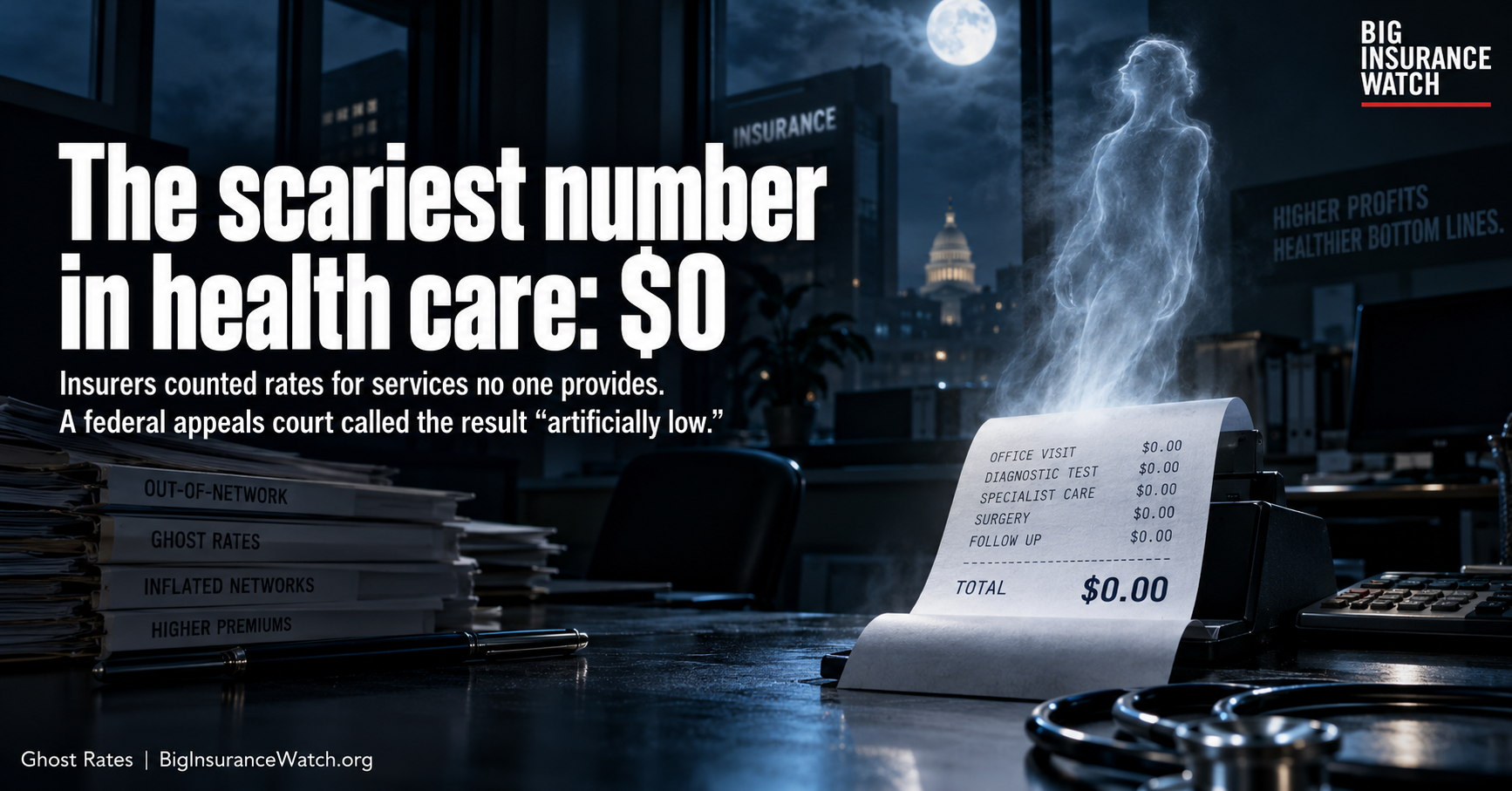
Ghost Rates: The Scariest Number in Health Care This Halloween
Insurers padded their No Surprises Act benchmark with prices for services no one provides, some as low as $0. A federal appeals court called the result "artificially low."
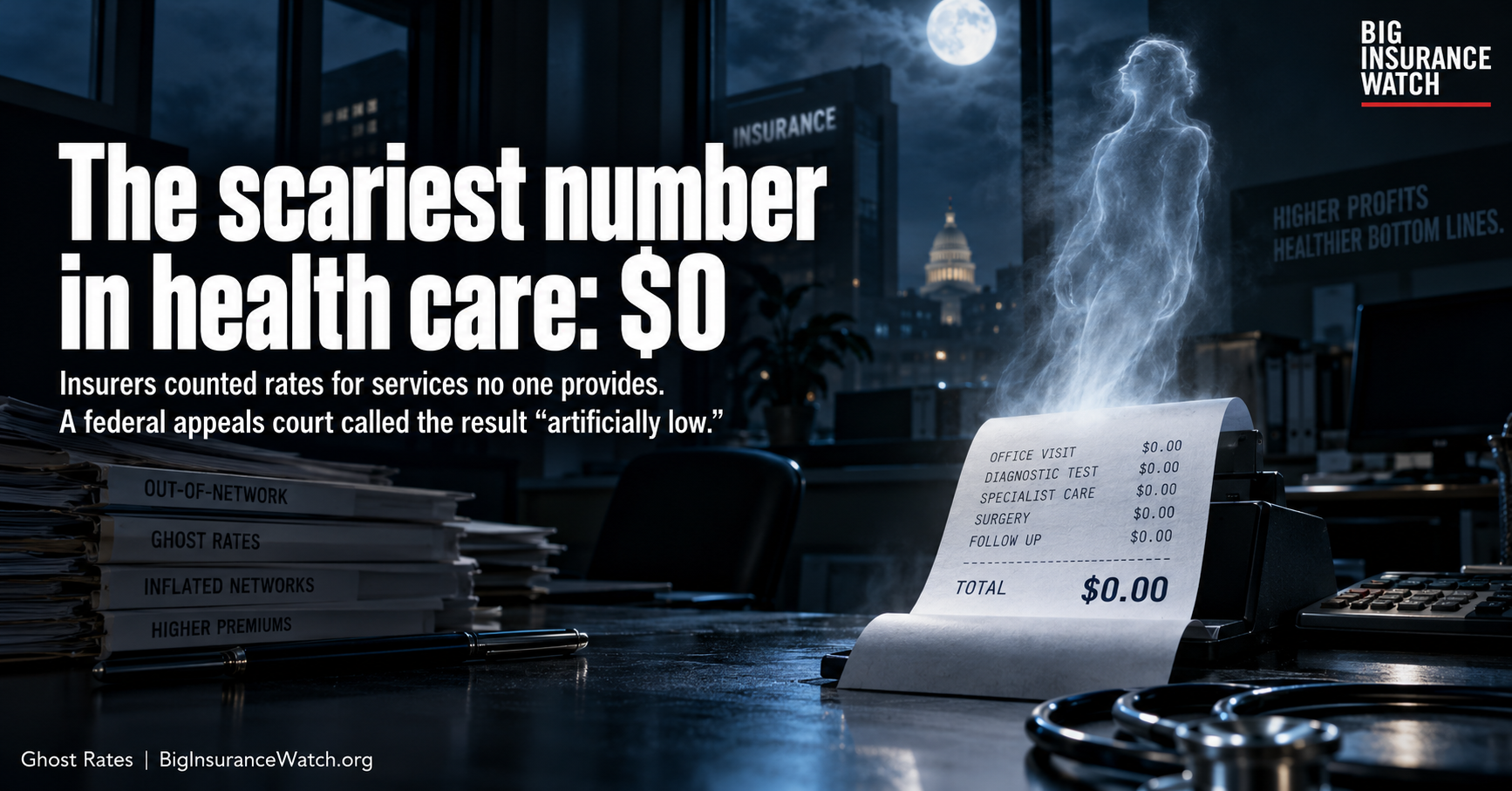
Last week we wrote about ghost networks: insurance directories full of doctors who are not really taking patients. This Halloween, meet their cousin, ghost rates.
Under the No Surprises Act, an insurer's "qualifying payment amount," or QPA, is supposed to reflect the median rate it actually pays in-network providers for a service. That number matters. It helps set what patients pay out of pocket, and it is the starting point when a payment dispute goes to a neutral arbitrator.
For years, insurers counted rates for services a provider never actually performs. A contract might list a price for a procedure that doctor has never done and never will, sometimes as low as $0. Those phantom prices went into the median and pulled it down.
In August, the full U.S. Court of Appeals for the Fifth Circuit ended the practice. The court found that ghost rates produced "artificially low QPAs" and struck them from the federal formula.
Federal auditors keep finding problems, too. CMS found Aetna of Texas calculating air ambulance QPAs from paid amounts instead of contracted rates. This month, auditors found CareSource substituted "usual and customary" rates in all 952 QPAs they sampled. Neither audit carried a financial penalty.
Why does this matter now? Because the newest proposals in Washington would make the insurer's number the final word. One bill would end arbitration and pay out-of-network care at the insurer's 2019 median rate plus inflation, with no neutral review. A think tank proposal would cap arbitration awards near the insurer's in-network rates. So when you hear that arbitrators award "four times the QPA," ask a simple question: four times what? Some of those benchmarks were built in part on rates that never existed.
The answer is not to hand the pen to the insurer. Keep the neutral referee. Make the insurer's numbers honest. And make sure that when an arbitrator rules, the award actually gets paid, which is what Rep. Greg Murphy's bipartisan No Surprises Act Enforcement Act (H.R. 4710) sets out to do.
Patients pay real premiums. They deserve real networks and real rates. Happy Halloween.
Sources
Texas Medical Ass'n v. HHS (TMA III), U.S. Court of Appeals for the Fifth Circuit, en banc, Aug. 11, 2026
CMS QPA audit reports: Aetna Health of Texas (2024) and CareSource (Oct. 2026)
H.R. 10788, Lower Premiums, Faster Payments Act (Pallone, Oct. 2026)
Paragon Health Institute, "Fixing the No Surprises Act" (Sept. 2026)
H.R. 4710, No Surprises Act Enforcement Act (119th Congress)

Ghost Networks. Real Premiums. Patients Deserve Better.
Ghost networks. Real premiums. A new push for accurate provider directories raises a basic question: can patients actually use the care their insurance promises?
Big Insurance likes ghosts. Patients need real care.
Halloween ghosts disappear when the decorations come down. A health plan’s “ghost network” can leave patients chasing care long after October ends. The premium is real. The promised access should be, too.
A provider directory is part of an insurer’s promise to its members. When a listed clinician cannot be reached, no longer participates or cannot accept a patient, a long list of names can offer far less access than it appears to provide.
The pressure to get directories right is growing
In new reporting from Becker’s Payer Issues, Elizabeth Casolo describes lawsuits over directory accuracy and renewed efforts to address the problem. The lawsuits contain allegations, not findings of liability. But the underlying question deserves a direct answer: can members actually use the network they are paying for?
On October 16, CMS proposed new Medicare Advantage directory requirements. Plans would verify and update information at least every 90 days, report accuracy scores and display those scores publicly. The proposal also would protect members from higher out-of-network cost sharing when they obtain care after relying on an inaccurate directory listing.
These are proposed rules, not protections newly in force. CMS describes them as changes for contract year 2028. They are a step toward accountability, but patients need usable networks today.
A directory is not an appointment
Our recent appointment-access analysis examined a JAMA Health Forum study of mental-health directories across six Blue Cross Blue Shield licensees in five states. Just 12.4% of 5,822 initial secret-shopper calls secured an appointment. Many calls could not be evaluated, often because they reached voicemail; the adjusted appointment rate among evaluable calls was 32.1%. These are appointment-access measures, not claims-denial rates.
The practical point is straightforward: listing a clinician is not the same as delivering a path to care.
What accountability should look like
Verify the promise. Test whether listed clinicians can actually be reached and whether participation and availability information is accurate.
Show the results. Give members clear, comparable information about directory reliability and the ability to obtain appointments.
Fix the failure. Correct bad listings promptly and help members find care when the advertised network falls short.
Protect the patient. Members should not carry the financial burden of an insurer’s inaccurate information.
Ghost networks concern access to listed providers. The payment-benchmark problems examined in our No Surprises Act audit coverage are a separate issue. Both deserve scrutiny, without confusing the evidence.
Paying for coverage should buy more than a directory full of possibilities. It should buy a dependable way to get care.
Have a documented directory problem or difficulty finding an in-network provider? Tell Big Insurance Watch.

Patients Were Promised Protection. Federal Audits Found Failures.
Federal audits found flawed payment calculations, missing disclosures and air ambulance claims excluded from No Surprises Act processing. Patient protections need more than a promise.
CMS audits identified flawed payment calculations, missing disclosures and air ambulance claims improperly excluded from No Surprises Act protections.
Patients should not need an auditor to make their insurance protections work. Yet two newly published federal audits show why oversight matters: the systems responsible for applying the No Surprises Act failed important compliance checks.
The findings reach beyond a technical argument over payment formulas. They concern the information providers receive and the protections patients should have when an emergency leaves them no choice about who delivers their care.
What the audits found
952 payment calculations
In its CareSource of Indiana audit, CMS identified an improper calculation method affecting 952 qualifying payment amounts, or QPAs, across 106 sampled claims. CareSource used usual-and-customary rates instead of the required contracted-rate methodology. CMS also identified missing disclosures and required a broader self-audit, including refunds wherever consumers paid excess cost-sharing.
2 air ambulance claims excluded
In the Ohio School Employees Retirement System plan, administered by Aetna, two of six reviewed air ambulance claims were incorrectly excluded from NSA processing. An erroneous retiree-only designation in the administrator’s system caused the problem. The audit also identified disclosure failures.
These are findings from specific audits, not estimates of nationwide error rates.
A protection is only as strong as its implementation
The qualifying payment amount is a benchmark used in patient cost-sharing and considered in federal payment disputes. When that calculation is wrong, or required information is missing, the process becomes harder to trust.
For air ambulance patients, the stakes are especially clear. They cannot shop for a different aircraft while facing a medical emergency. Their protection should not depend on whether an administrator’s system assigns the correct designation.
Big Insurance Watch believes the policy debate should scrutinize compliance with existing protections as closely as it scrutinizes arbitration outcomes. Before policymakers weaken the tools available to resolve payment disputes, they should demand reliable calculations, complete disclosures and evidence that corrective actions work.
From findings to accountability
Our position is straightforward: publish audit findings, correct flawed processing, return excess patient payments and verify that the fixes hold. Promises of coverage must translate into protections that actually function.
These audits complement the accountability questions raised in M. Dylan McClelland’s Los Angeles Times op-ed. They also connect to the access concerns explored in our Red Bluff Watch File: the rules governing emergency care need to work in practice.
Scope and follow-through
Both audits cover services from January 2022 through May 2023 and describe corrective actions. They do not establish that every calculation error reduced provider payments or that the failures were intentional. CMS recorded an Aetna system correction and accepted the plan’s rationale for not reprocessing the two identified claims, while requiring a broader review. We focus here on documented calculation, processing and disclosure failures, rather than the separate litigation over unused contracted rates.
Read the reporting and the records
TechTarget: Newly published NSA audits reveal QPA miscalculations (October 22, 2026)
Analysis by Big Insurance Watch, a project of the Emergency Air Rescue Alliance.

You Pay the Full Premium. Getting an Appointment Shouldn’t Be a Long Shot.
Just 12.4% of initial calls secured a mental-health appointment in a five-state study of Blue Cross Blue Shield directories. BIW examines the gap between paying for coverage and finding care.
Just 12.4% of initial calls secured a mental-health appointment in a five-state study of Blue Cross Blue Shield directories.
Paying for coverage should mean having a practical path to care. A directory full of names is no substitute for an appointment patients can actually book. New research puts that gap in focus.
What the study found
Researchers made 5,822 secret-shopper calls to psychiatrists and psychologists listed by six Blue Cross Blue Shield licensees across Delaware, Montana, New Jersey, Rhode Island and Virginia. Calls took place between October 2025 and March 2026. The study was published in JAMA Health Forum on October 16, 2026.
Across all initial attempts, 12.4% yielded an appointment with any clinician. Among calls with a definitive outcome, 55.6% encountered directory inaccuracies and 21.6% encountered capacity limitations.
Coverage should open doors
Insurance is sold as a promise of access. When patients must work through inaccurate listings, unanswered calls and closed panels, the burden of making that promise work falls on the people who already paid for it.
For someone seeking mental-health support, every extra call is another task between asking for help and receiving it. Network adequacy should be demonstrated through usable appointments, not simply the length of a provider list.
Big Insurance Watch believes insurers should publish independently checked directory accuracy, appointment availability and wait times. Employers buying coverage should demand those measures. Regulators should test whether advertised networks work for patients in practice.
Collecting premiums comes with a responsibility to deliver meaningful access. Patients deserve evidence that the network they are paying for is a network they can use.
Understanding the number
The 12.4% figure measures initial call attempts, not the share of covered care delivered or claims denied. Most calls (61.3%) had no definitive outcome, often reaching voicemail or automated systems. The study does not establish whether later attempts secured care. Among evaluable calls, the adjusted appointment rate with any clinician was 32.1%. Findings concern the plans and specialties studied, not every insurer or service.
Sources
Read the original JAMA Health Forum study →
Mental Health Ghost Networks in Commercial Insurance Plans · October 16, 2026
Read Becker’s reporting →
12% of calls to mental health clinicians in Blue Cross directories yield appointments: Study · October 19, 2026
BIW analysis. Research findings are attributed above; the accountability recommendations are Big Insurance Watch’s position.
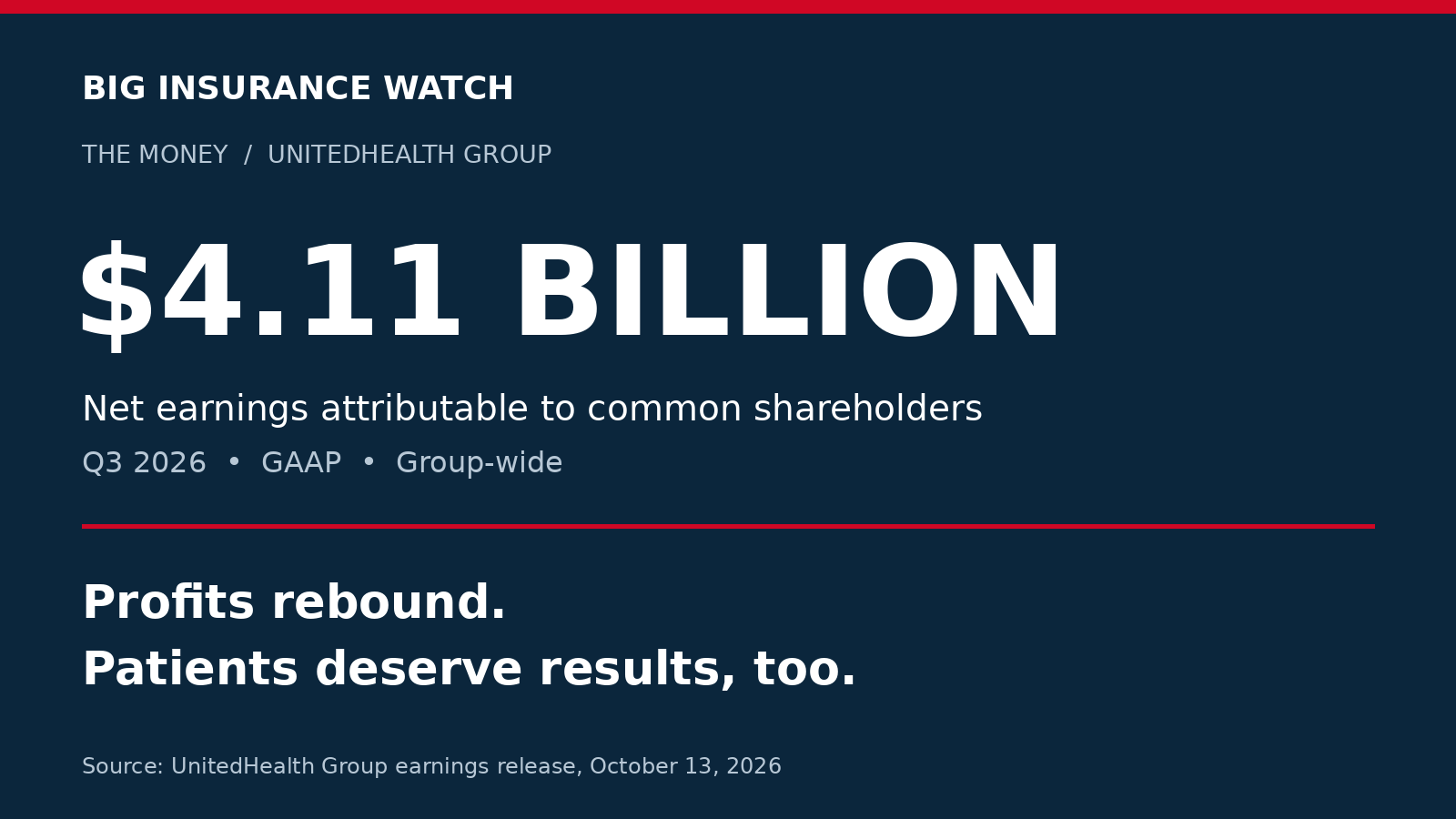
UnitedHealth’s Profits Rebound. Patients Deserve Results, Too.
UnitedHealth Group reported $4.11 billion in quarterly shareholder earnings. BIW examines the numbers, the company’s promises and why patients deserve clear measures of access and timely payment.
THE MONEY | BIW ANALYSIS • OCTOBER 13, 2026
$4.11 BILLION
UnitedHealth Group net earnings attributable to common shareholders
Third quarter 2026 • GAAP • Group-wide, including UnitedHealthcare and Optum
Forbes reports a sharp rebound in UnitedHealth Group’s quarterly profits. The company’s earnings release confirms $4.11 billion in shareholder net earnings for the three months ended September 30, 2026. The financial recovery is clear. Whether patients are getting a better experience deserves just as much scrutiny.
The numbers behind the headline
The comparable figure a year earlier was $2.348 billion, putting the increase at roughly 75%. These are group-wide shareholder earnings, not revenue or the profits of the insurance division alone.
UnitedHealth also reported a medical care ratio of 88.4%, down from 89.9% a year earlier. This measures medical costs relative to premium revenue, not the percentage of claims approved or denied. The company attributed the change to cost management, benefit design, pricing and care-delivery improvements.
BIW’s view: measure the promise, not just the profit
A stronger earnings report is not the same as stronger access to care. People buy coverage so it will be there when they need it. Insurers should be judged on timely decisions, access to appropriate treatment and payment for covered care, alongside their financial performance.
UnitedHealth says it is reducing prior authorization requirements and accelerating payments to rural hospitals. Those commitments create a concrete accountability test: show the results. Publish clear measures of approval times, appeals, payment timeliness and whether patients can reach the care their plans promise.
Profits are reported every quarter. Patients deserve the same clarity about whether coverage delivers.
Sources and scope
This is original BIW commentary on Forbes reporting and UnitedHealth’s earnings release, not a republication of the article. The earnings figures alone do not establish that improper denials caused the profit increase. The percentage change uses the unrounded shareholder earnings figures.
Read the Forbes story →
Bruce Japsen • October 13, 2026
Read UnitedHealth’s earnings release filed with the SEC →
October 13, 2026 • Shareholder earnings: reconciliation table; medical care ratio and company commitments: release text.

Introducing Big Insurance Watch
You paid for coverage. Your insurer should deliver. Introducing BIW, a project of EARA documenting denials, delays and broken promises, with emergency air medical access at the core of our work.
You paid for coverage. Your insurer should deliver. Big Insurance Watch, a project of the Emergency Air Rescue Alliance (EARA), documents failures to keep that promise and demands accountability for the consequences.
Our starting point
Emergency air medical care is central to our work. Our wider focus is the same broken promise: denied care, delayed payment and barriers that leave patients and providers fighting for coverage already paid for.
What you can expect
This space will bring together documented failures, policy analysis and original source material. We will make the case for accountability with facts, explain our perspective and distinguish findings from opinion.

How we approach insurance accountability
Document the failure. Demand accountability. How BIW uses evidence, context and original sources to build a public record of insurers’ broken promises.
Document the failure. Demand accountability.
A premium is payment for a promise. When an insurer denies covered care, delays payment or fails to honor an obligation, patients and providers deserve more than another explanation. Big Insurance Watch documents those failures and builds the public record needed to hold insurers accountable.
Context matters
A headline, a denial letter, or a single experience can raise an important concern. Understanding that concern takes context. Our aim is to connect reporting and commentary to the underlying policy, document, or source—and distinguish documented facts from disputed claims and our own advocacy positions.
Our starting point: emergency air medical care
Big Insurance Watch is a project of the Emergency Air Rescue Alliance (EARA). Emergency air medical access is central to our work. It also opens a broader conversation about how insurance decisions affect patients, families, and communities across health care.
What you can expect here
This section will host news, announcements, policy commentary, and source-based reports as they become available. We will identify the material behind our analysis and make clear when an article represents our perspective.
We are also developing a thoughtful way for people to share their experiences. Patient stories will only be published with permission; illustrative photography on this site is not a substitute for a verified account.
Explore the issues we are watching or learn more about the project.